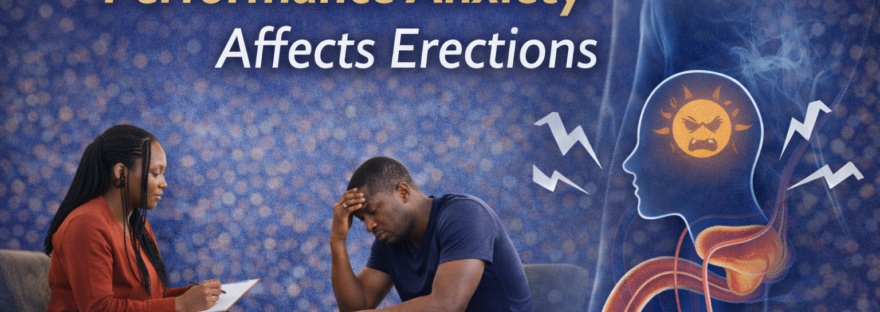
Are you struggling with anxiety and erections? You are not alone. Many men feel a lot of pressure when it comes to being intimate. If you find that your body does not always do what you want it to do, it can feel very scary. You might worry that something is wrong with you or that you are “broken.” However, this is a very common problem. Most of the time, it is not because of a medical issue. It is often because of how your mind and body talk to each other.
If you are feeling this way, you should know that many other men have been exactly where you are. It is okay to feel nervous. The good news is that you can learn how to manage these feelings. Once you understand why your body reacts this way, you can start to feel more like yourself again. For more help with these feelings, you can check out this guide: https://tinyurl.com/sexualhealingguide.
What is Performance Anxiety?
Performance anxiety is like having “stage fright” in the bedroom. Imagine an actor who has to go out on a big stage. If the actor is thinking about all the people watching him, he might forget his lines. He is too busy worrying about being perfect to just enjoy the play. This is what happens to some men during intimacy. Instead of focusing on good feelings, they are thinking about how they look or if they will “pass the test”.
When you think of sex as a performance, your brain treats it like a big exam. This mindset makes you very self-conscious. You might start “spectatoring.” This means you are mentally “stepping outside” of your body. You are watching yourself from the side and grading your performance. When your brain is busy grading you, it cannot focus on being in the moment.
Common Causes of Erectile Difficulties
There are many reasons why a man might start to feel anxious. These causes are usually about your thoughts and feelings rather than a physical sickness. Here are some common reasons:
Fear of Failure: You might be afraid of letting your partner down. This makes you feel like you have to be perfect every single time.
Past Bad Experiences: If things did not go well one time, you might worry it will happen again. This creates a “vicious cycle” where worry causes more trouble.
Body Image Issues: You might worry about your weight or how your body looks. If you feel bad about yourself, it is hard to feel relaxed with someone else.
Unrealistic Expectations: Watching movies or things online can make you think sex has to look a certain way. Real life is rarely like that, and trying to match those images creates stress.
Stress in Life: If you are worried about your job, money, or school, your brain stays in “worry mode” even when you try to be romantic.
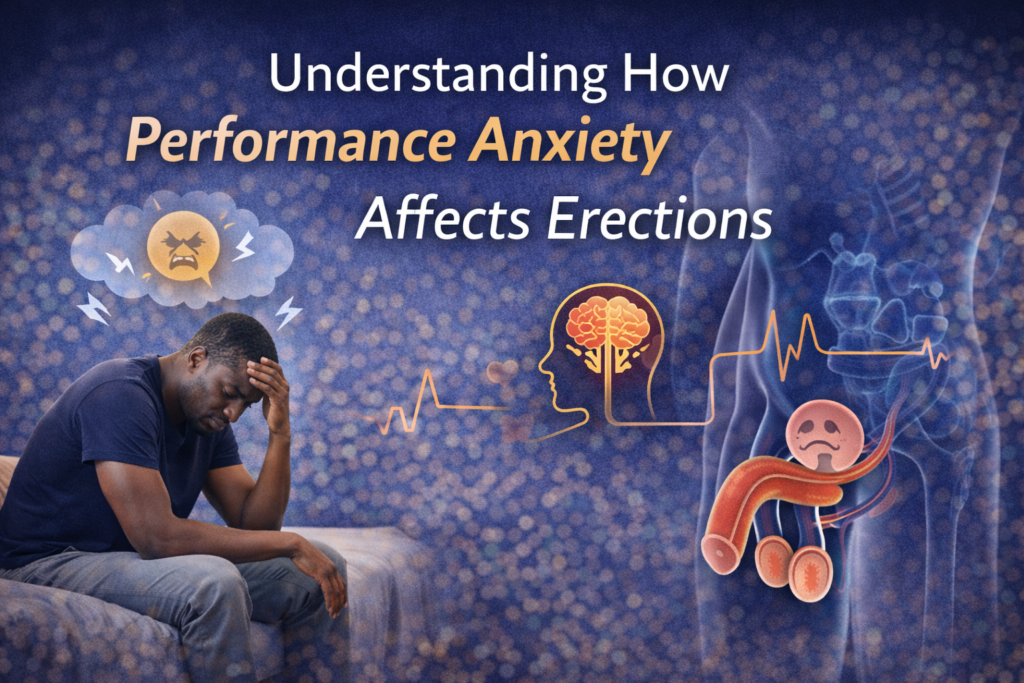
Your brain and your body are connected like a team. When you are excited and happy, your brain sends a “go” signal to your body. This signal tells your blood vessels to relax. When they relax, they open up like a wide door. This allows blood to flow into the right places so you can get ready for sex.
However, anxiety acts like a “stop” sign. When you feel nervous, your brain thinks you are in danger. It triggers something called the “fight-or-flight” response. This is the same feeling you would get if you saw a grizzly bear in the woods. Your brain releases a chemical called adrenaline.
Adrenaline tells your blood vessels to tighten up. Your body wants to send all your blood to your heart and legs so you can run away from the “danger”. Because the blood is being sent to your legs and arms, it is not going where it needs to go for intimacy. Even if you really want to be with your partner, your body is busy trying to “save” you from the bear in your head.
Signs You Should Pay Attention To
It is important to know if your erectile difficulties are coming from anxiety or something else. If you are having trouble, look for these signs:
Your heart starts racing even before anything happens.
You feel sweaty or shaky when you think about being intimate.
You have “intrusive thoughts” like “What if I fail?” or “I hope this works”.
You check yourself constantly to see if you are staying “ready”.
Things work fine when you are alone, but not when you are with a partner.
You still wake up with “morning wood” several times a week.
If you notice these signs, it usually means your body is physically healthy, but your “alarm system” is just too sensitive. If you want to learn more about how to calm that alarm, you can find help here: https://tinyurl.com/sexualhealingguide.
Simple Steps That May Help
The good news is that you can “train” your brain to stop sounding the alarm. You can teach your body that you are safe and that it is okay to relax. Here are some simple things you can try at home:
1. Try “Bubble Breathing.”
When you feel nervous, your breath usually gets shallow. To fix this, pretend you are blowing a big bubble. Breathe in slowly through your nose. Then, blow out very slowly through your mouth. This sends a signal to your brain that says, “We are safe. You can turn off the adrenaline now”.
2. Focus on Touch, Not the “Goal.”
Sometimes we focus too much on the end of the story. Instead, try to just enjoy the feeling of your partner’s skin or a hug. Experts call this “Sensate Focus”. It means you are just noticing sensations like warmth or softness without worrying about what happens next. You can learn more about connecting with your body at this internal link: https://tinyurl.com/embrace-sexuality.
3. Talk to Your Partner
Sharing your feelings can take a huge weight off your shoulders. You might say, “I really like you, but I am feeling a little nervous tonight.” Most partners will be very supportive. Knowing that they understand helps the pressure go away.
4. Move Your Body
Regular exercise, like walking for 30 minutes a day, helps your blood flow stay strong. It also helps you feel more confident and less stressed.
5. Be Kind to Yourself
If things don’t go perfectly, don’t get mad at yourself. You are not a machine. Some days are just better than others. If you treat yourself with kindness, you won’t be as afraid the next time.
When to See a Doctor
While anxiety is a big cause of these issues, sometimes there is a physical reason too. It is a good idea to see a doctor if:
You never have erections, even when you are alone or when you wake up in the morning.
The problem happens more than 25% of the time and does not get better.
It feels painful when your body tries to get ready.
You are also feeling very sad or having trouble with other parts of your health.
A doctor can check your heart, your blood sugar, and your hormones. They can also help you find a therapist who specializes in intimacy. Remember, asking for help is a sign of strength, not weakness. To find a clear path forward, take a look at my guide: https://tinyurl.com/sexualhealingguide.
Frequently Asked Questions
1. Can a single bad experience cause long-term anxiety and erections?
Yes. If things did not go well once, your brain might try to “protect” you by worrying about it the next time. This is very common, but it can be fixed by learning to relax and being patient with yourself.
2. Is it normal to have erectile difficulties in my 20s or 30s?
Yes, it is very common! About 1 in 4 men who go to the doctor for these issues are under the age of 40. Stress and performance anxiety are the biggest reasons for younger men.
3. Will taking a pill fix the anxiety?
Sometimes a doctor might give you a pill to help you get started, but pills do not fix the worry in your head. You still need to work on the anxiety to truly feel better and regain your confidence.
4. How does sleep affect my ability to stay ready?
If you do not get enough sleep, your body cannot produce enough “fuel” for intimacy. This can make you feel tired and more stressed, which makes anxiety worse. Getting 7 to 9 hours of sleep helps your whole body work better.
5. Does this mean I am not attracted to my partner?
No, that is a common myth! You can be very attracted to someone and still feel nervous. In fact, the more you like someone, the more you might worry about doing a good job.
Encouraging Conclusion
If you are dealing with anxiety and erections, please remember that you are going to be okay. Your body is just trying to protect you from stress. By learning how to breathe, talking to your partner, and taking the pressure off yourself, you can break the cycle of worry. You deserve to feel happy and confident. Take it one step at a time, and don’t be afraid to ask for help. You have the power to reclaim your health and your joy.
Meta Description: Learn how performance anxiety causes erectile difficulties and what you can do to fix it. Discover simple steps to calm your mind and body today.
Comprehensive Clinical and Sociopsychological Analysis of Erectile Dysfunction in Young Men: Etiological Factors, Pathophysiological Mechanisms, and Integrative Recovery Strategies
The clinical landscape regarding male sexual health has undergone a radical transformation in the last decade. Historically, erectile dysfunction was classified almost exclusively as a condition of senescence, a natural byproduct of the aging process linked to declining vascular elasticity and hormonal shifts in men over the age of 50 or 60. However, contemporary epidemiological data reveal a burgeoning crisis among younger cohorts. Men in their 20s and 30s are presenting with erectile difficulties at rates previously thought impossible, with some studies suggesting that up to one-third of new diagnoses now occur in men under the age of 40. This shift indicates that the modern environment, characterized by unique psychological stressors, digital consumption patterns, and metabolic challenges, is fundamentally altering the baseline of male sexual function.
While earlier medical models often dismissed erectile dysfunction in young men as purely psychogenic—attributing it to “nerves” or “inexperience”—modern research recognizes it as a multidimensional condition where organic and psychological factors often overlap. For instance, a young man might have a minor vascular issue or a hormonal imbalance that makes achieving an erection slightly more difficult; this physical hurdle then triggers a cascade of performance anxiety, creating a self-reinforcing loop where the mind and body are in conflict. Understanding the causes of erectile dysfunction in young men requires a deep dive into the intersection of biology, psychology, and lifestyle.
What is Erectile Dysfunction in Young Men?
Erectile dysfunction, often referred to as ED or impotence, is defined as the consistent or repeated inability to achieve or maintain an erection firm enough for satisfactory sexual activity. It is important to note that erectile function exists on a spectrum. It is not always a complete inability to get hard; it can also involve weak erections, those that disappear during activity, or those that require an excessive amount of stimulation to maintain.
In younger men, the condition can be particularly distressing because of the high social and personal expectations surrounding youth and masculinity. Many young men believe that sexual function should be “automatic.” When it is not, the resulting shame can prevent them from seeking the medical or psychological support they need. Statistically, the prevalence of ED in younger men is often underestimated. While general estimates for men in their 20s hover around 8%, some multinational studies suggest that when mild symptoms are included, the figure may be as high as 35%.
Age Group
Estimated Prevalence of ED Symptoms
Primary Contributing Factors
20–29
8% to 14%
Stress, anxiety, lifestyle habits
30–39
11% to 15%
Early vascular signs, metabolic issues
Under 40 (General)
Up to 35%
Multi-factorial (Organic + Psychogenic)
The physiological process of an erection is a complex “team effort” involving the brain, the nervous system, hormones, and blood vessels. For an erection to occur, the brain must first send a signal through the nerves to the blood vessels in the penis. These vessels then relax and open up, allowing blood to flow into the spongy tissue of the penis. At the same time, the veins that normally carry blood away from the penis close off, trapping the blood inside to create rigidity. If any part of this system—the signal, the flow, or the “trap”—is interrupted, the result is erectile dysfunction.
Common Organic Causes of Erectile Dysfunction in Youth
Although psychological factors are frequent in younger men, a significant portion of cases involves identifiable physical or “organic” causes. Research suggests that between 14.8% and 45% of young men with ED have an underlying physical etiology that must be addressed.
Vascular Health and Cardiovascular Disease
One of the most critical insights in modern men’s health is the role of ED as a “canary in the coal mine” for heart disease. The arteries that supply blood to the penis are much smaller than the coronary arteries supplying the heart. Specifically, the penile arteries are roughly 1 to 2 millimeters in diameter, whereas the heart’s arteries are 10 times larger. Consequently, conditions that damage the lining of the blood vessels—such as high blood pressure, high cholesterol, and atherosclerosis—often show up in the form of erectile dysfunction years before they cause a heart attack or stroke.
High blood pressure (hypertension) is a major risk factor. It damages the arteries over time, making them less flexible and less able to dilate when the brain sends the signal for an erection. High cholesterol leads to the buildup of plaque in these narrow vessels, physically blocking the volume of blood needed for rigidity. For a young man in his 20s or 30s, experiencing persistent ED can be the first warning sign that his vascular system is in trouble.
Metabolic Disorders and Diabetes
Diabetes is arguably the most potent physical risk factor for ED across all age groups. It provides a “double punch” to sexual function by damaging both the blood vessels and the nervous system. Chronic high blood sugar leads to a condition called neuropathy, where the nerves that signal the penis to relax and fill with blood become damaged and less responsive. Furthermore, diabetes is closely linked to obesity and metabolic syndrome, both of which further impair vascular health and hormonal balance.
Condition
Mechanism of Impact on Erections
Hypertension
Arterial stiffness and reduced dilation
Diabetes
Nerve damage (neuropathy) and vascular inflammation
Obesity
Lowered testosterone and increased systemic inflammation
Sleep Apnea
Reduced oxygenation and hormonal disruption
Endocrine Imbalances and Low Testosterone
Hormones act as chemical messengers that tell the body how to function. Testosterone is the primary hormone responsible for male sex drive and the regulation of the erectile response. While testosterone levels naturally decline by about 1% to 2% per year after the age of 30, certain factors can cause a premature drop in younger men.
Low testosterone, or “Low T,” can result from testicle injury, chronic illness, or lifestyle factors like extreme stress and lack of sleep. Symptoms of Low T include not only erectile dysfunction but also a noticeable drop in sexual desire (libido), reduced energy, and mood changes such as irritability or depression. However, it is a common misconception that Low T is the most common cause of ED; in reality, many men with ED have normal hormone levels, and vascular or psychological issues are often more prevalent.
The Psychological Dimension: Performance Anxiety in Bed
In men under 40, psychological and emotional factors remain the leading cause of erectile difficulties. The brain is the most important sex organ; it must be able to focus on pleasure and arousal to trigger the physical response. When the brain is occupied by fear, worry, or stress, it cannot send the necessary signals to the body.
The Mechanics of Performance Anxiety
Performance anxiety in bed occurs when a man becomes overly focused on his ability to “perform” rather than enjoying the intimacy. This mindset often treats sex like a test or a stage play where the partner is an “audience” that is judging them. When this happens, the brain perceives a threat, which triggers the body’s “fight-or-flight” response.
During the fight-or-flight response, the amygdala (the brain’s alarm system) tells the body to release adrenaline and cortisol. Adrenaline is a natural vasoconstrictor—it tells the blood vessels to tighten up so that blood can be redirected away from the digestive and reproductive systems and toward the heart and legs so the person can “run away” from the perceived danger. This makes it physically difficult for blood to flow into the penis, regardless of how much the man wants to be intimate.
The Vicious Cycle of Failure
One of the most frustrating aspects of psychological ED is that it creates a self-fulfilling prophecy. If a man has trouble one time—perhaps due to being tired, stressed, or having too much to drink—he may begin to worry that it will happen again the next time. This worry is the anxiety that then causes the next failure. Over time, the man may start to avoid intimacy altogether to prevent the embarrassment of “failing” again.
Psychological Trigger
Impact on Arousal
Fear of Failure
Triggers adrenaline, which blocks blood flow
Spectatoring
Focusing on one’s own body instead of pleasure
Relationship Stress
Resentment or conflict prevents emotional arousal
Body Image Issues
Self-consciousness leads to mental distraction
Spectatoring and Mental Distraction
Researchers use the term “spectatoring” to describe the process where a man mentally “steps outside” of his body during sex to monitor his own performance. Instead of feeling the touch of his partner, he is thinking, “Am I hard enough? How long will I last? Does she think I’m doing a good job?”. This mental noise interrupts the sensory feedback loop. To maintain an erection, the brain needs constant positive stimulation. When the mind is full of critical thoughts, that stimulation stops, and the erection subsides.
Digital Consumption and Modern Lifestyle Factors
The modern world has introduced new variables that significantly impact sexual health, particularly for the digital-native generations.
Pornography-Induced Erectile Dysfunction (PIED)
There is increasing clinical discussion regarding the link between excessive pornography use and erectile dysfunction in young men. Pornography often presents unrealistic sexual scenarios and “hyper-stimulating” visuals that the brain was not evolved to handle in such high quantities. Over time, the brain’s reward system can become desensitized. This means that “real-life” intimacy may feel less exciting or slower by comparison, making it harder for the brain to trigger the arousal needed for an erection with a physical partner.
The Role of Technology and Sleep Quality
Poor sleep is a quiet but powerful killer of sexual function. Most testosterone production happens during deep sleep. Men who consistently get less than 7–8 hours of sleep, or those who have poor quality sleep due to blue light from screens (phones, computers) before bed, often have lower testosterone levels and higher stress hormones. Sleep deprivation also reduces the body’s ability to produce nitric oxide, the molecule that allows blood vessels to relax.
COVID-19 and Systemic Inflammation
Recent studies have even linked the COVID-19 virus to erectile dysfunction. The virus causes inflammation in the lining of the blood vessels (endothelium). Because the vessels in the penis are so small and sensitive, this inflammation can impair their ability to function properly long after the respiratory symptoms of the virus have passed.
Signs You Should Pay Attention To
It is normal for a man to have occasional trouble in the bedroom due to stress, tiredness, or alcohol. However, there are certain “red flags” that suggest a man should seek a professional opinion.
Loss of Morning Erections: Healthy men typically wake up with an erection (“morning wood”) several times a week. This is a sign that the blood vessels and nerves are working correctly. If these spontaneous erections disappear entirely, it often points to a physical or vascular problem.
The “Global” vs. “Situational” Pattern: If a man can get a strong erection while alone (during masturbation) but struggles with a partner, the cause is almost certainly psychological or related to performance anxiety. If he cannot get an erection under any circumstances, the cause is more likely to be physical.
Worsening Over Time: If the ability to get or keep an erection slowly gets worse over many months, it may indicate a progressive vascular issue, such as hardening of the arteries.
Pain or Curvature: Any pain during an erection or a new, significant curve in the penis (which could be Peyronie’s disease) requires a medical check-up.
Associated Symptoms: If ED is accompanied by shortness of breath, high fatigue, or sudden weight gain, it may be a sign of a broader health issue like heart disease or diabetes.
Simple Steps That May Help
The good news for young men is that erectile dysfunction is often reversible through lifestyle changes and simple at-home habits. Because the body is resilient at a young age, small changes can lead to big results.
The “Heart-Healthy” Approach to Sex
Since erections are fundamentally about blood flow, whatever is good for the heart is good for the penis.
Move More: Even 30 minutes of brisk walking a day can reduce the risk of ED by 41%. Aerobic exercise (like running, swimming, or cycling) improves the health of the blood vessel lining and boosts nitric oxide levels.
Eat Better: The Mediterranean diet is the “gold standard” for erectile health. This means focusing on whole foods, fruits, vegetables, fish, and healthy fats like nuts and olive oil.
Manage Weight: A man with a 42-inch waist is 50% more likely to have ED than a man with a 32-inch waist. Losing even a small amount of weight can lower inflammation and raise testosterone naturally.
Heart-Healthy Snack
Benefit for Erections
Walnuts and Almonds
High in L-arginine, which helps vessels open
Berries (Blueberries/Strawberries)
Rich in flavonoids that protect blood vessels
Greek Yogurt with Honey
Low-fat protein that supports muscle and hormone health
Apple Slices with Peanut Butter
Fiber and healthy fats for heart and vascular health
Pelvic Floor Strength (Kegels)
Just as you might go to the gym to strengthen your chest or arms, you can strengthen the muscles that support an erection. These are called the pelvic floor muscles. They are responsible for “closing the door” on the veins so that blood stays trapped in the penis.
How to do it: Imagine you are trying to stop yourself from passing gas or stopping the flow of urine mid-stream. Contract those muscles for 3–5 seconds, then relax for 5 seconds.
The Routine: Do 10–15 repetitions, three times a day. Over 3 to 4 months, this can significantly increase the rigidity of erections.
Mindfulness and Relaxation
If performance anxiety in bed is the main culprit, learning to calm the nervous system is essential.
Bubble Breathing: Take a slow breath in through your nose, and blow out slowly through your mouth as if you are trying to blow a huge bubble. This signal tells the brain that you are safe and that it can turn off the adrenaline (the “fight-or-flight” response).
The 5 Senses Game: During intimacy, if you find your mind racing, stop and name: 5 things you see, 4 things you can feel (the sheets, your partner’s skin), 3 things you hear, 2 things you smell. This grounds you in the present moment and stops “spectatoring”.
For more detailed information on rebuilding your sexual confidence, you may find it helpful to explore this internal link: https://tinyurl.com/embrace-sexuality.
When to See a Doctor
While lifestyle changes can do a lot, there is no substitute for a professional medical evaluation. You should schedule an appointment with a doctor or a urologist if:
ED happens more than 25% of the time you try to be intimate.
You have stopped having morning erections.
You feel significant emotional distress, frustration, or shame about the issue.
You are taking medications for depression, blood pressure, or hair loss and noticed the change after starting them.
You have other health conditions like diabetes or high cholesterol.
Talking to a doctor about sex can feel awkward, but it is important to remember that they see these issues every single day. ED is a medical condition, not a personal failing or a loss of masculinity. Early diagnosis can not only fix your sex life but might also save your heart health in the long run.
Frequently Asked Questions
1. Is it normal to have erectile dysfunction in my 20s?
Yes, it is much more common than people think. Studies show that up to 14% of men in their 20s deal with it regularly, and even more experience it occasionally. Stress, anxiety, and modern lifestyle habits like poor sleep or high pornography consumption are major contributors for young men.
2. Can stress from work or school cause ED?
Absolutely. When you are stressed, your body is in a state of “high alert,” producing hormones like cortisol and adrenaline. These hormones constrict blood vessels and distract the brain from feeling aroused, making it very difficult for the body to physically respond to sexual stimuli.
3. Does having ED mean I’m not attracted to my partner?
Not at all. This is a common myth. Most men with ED have a very high desire for their partner, but their body’s “piping” or their brain’s “alarm system” is getting in the way. It is often a physical or anxiety-based issue, not a lack of attraction.
4. Can quitting smoking or drinking less alcohol help?
Yes, and often very quickly. Smoking damages the lining of your blood vessels and makes them “leaky,” meaning they can’t hold blood to stay hard. Alcohol is a depressant that slows down the nerve signals between the brain and the penis. Quitting or cutting back can lead to major improvements in a matter of weeks.
5. Will I need to take pills for the rest of my life?
Usually not, especially if you are young. For many young men, ED is caused by habits or anxiety. Once you improve your diet, start exercising, or learn to manage performance anxiety in bed, your body often returns to its natural, healthy function.
Encouraging Conclusion
If you are a young man experiencing erectile dysfunction, the most important thing to know is that you are not alone, and you are not broken. Whether the cause is physical, psychological, or a mix of both, there is a clear path forward. Your body is highly adaptable, and by making small, consistent changes to how you eat, move, and think, you can reclaim your confidence and your health.
Sexual health is a vital part of your overall well-being. Don’t let shame or silence keep you from the life you deserve. Start by being kind to yourself, talking openly with your partner, and seeking professional advice if the problem persists. You have the power to turn this around, and the first step is simply acknowledging that it’s okay to ask for help.
If you want a step-by-step framework to help you navigate this journey and heal your sexual function, explore my full guide here: https://tinyurl.com/sexualhealingguide.
Meta Description: Discover what causes erectile dysfunction in young men, from performance anxiety in bed to vascular health. Learn simple, natural steps to reclaim your health.